
Introduction
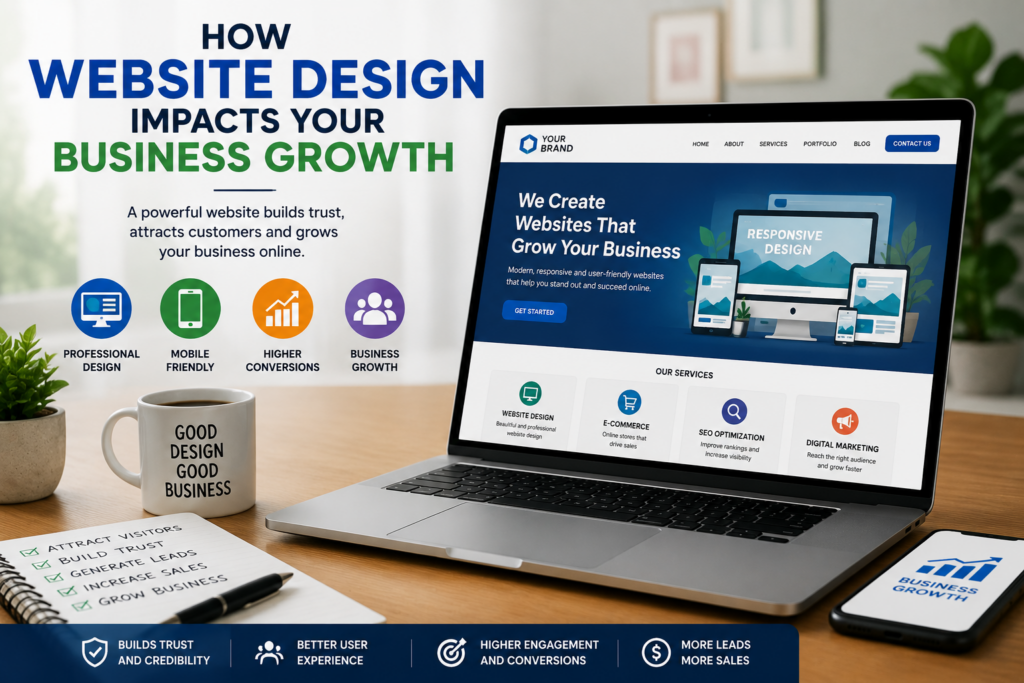
Website Design for Business Growth plays a crucial role in building a strong online presence. Today, customers often visit a website before contacting a business or making a purchase. Therefore, a professional website can create a positive first impression and help businesses attract more customers.
A website is more than just an online brochure. It represents your brand, communicates your value, and guides visitors toward taking action. Moreover, a well-designed website can improve trust, increase engagement, and generate more leads.
Whether you run a small business, startup, or established company, investing in website design can support long-term growth. As a result, businesses with professional websites often perform better than competitors with outdated or poorly designed websites.
What Is Website Design?
Website design refers to the process of creating the visual appearance, structure, and functionality of a website.
A good website design includes:
- User-friendly navigation
- Mobile responsiveness
- Fast loading speed
- Professional layout
- Clear call-to-action buttons
- Attractive visuals
Furthermore, website design focuses on creating a positive user experience while helping visitors find information quickly and easily.
Why Website Design Is Important for Business Growth
Many businesses underestimate the importance of website design. However, a poorly designed website can drive potential customers away.
On the other hand, a professional website can improve credibility and encourage users to explore your products or services.
Additionally, website design influences how visitors perceive your brand. Therefore, businesses that invest in quality website design often gain a competitive advantage.
Benefits of Website Design for Business Growth
Creates a Strong First Impression
First impressions matter in the digital world.
When visitors land on your website, they form an opinion within seconds. Therefore, a modern and professional design can encourage users to stay longer and learn more about your business.
Moreover, an attractive website helps build confidence and trust.
Improves User Experience
User experience is one of the most important factors in website success.
A well-designed website allows visitors to navigate easily and find information quickly.
As a result, users are more likely to remain on your website and interact with your content.
Increases Customer Trust
Customers often trust businesses with professional websites.
Furthermore, a clean design, secure connection, and clear information can improve credibility.
Consequently, visitors feel more comfortable contacting your business or making a purchase.
Supports SEO Performance
Website Design for Business Growth directly affects SEO performance.
A fast, mobile-friendly, and easy-to-navigate website provides a better user experience and can support SEO performance.
Good website design also makes it easier for users and search engines to access and understand important content.
Boosts Conversion Rates
A website should encourage visitors to take action.
For example, users may fill out a contact form, request a quote, or make a purchase.
Additionally, clear calls-to-action and strategic design elements can improve conversions.
Enhances Mobile Experience
Today, many users browse websites on smartphones and tablets.
Therefore, responsive website design is essential.
A mobile-friendly website provides a better experience and helps businesses reach more customers.
Strengthens Brand Identity
Your website reflects your brand identity.
Colors, typography, images, and layout all contribute to how users perceive your business.
Moreover, consistent branding helps create recognition and trust.
Generates More Leads
A well-structured website can attract and convert visitors into leads.
As a result, businesses can increase inquiries, appointments, and sales opportunities.
Key Elements of Effective Website Design
Simple Navigation
Visitors should find information quickly and easily.
Therefore, navigation menus should remain clear and organized.
Fast Loading Speed
Website speed impacts user experience and search rankings.
Furthermore, faster websites often achieve lower bounce rates.
Mobile Responsiveness
Responsive websites adapt to different screen sizes.
Consequently, users enjoy a better browsing experience across devices.
Clear Call-to-Action Buttons
Visitors should know what action to take next.
Examples include:
- Contact Us
- Request a Quote
- Get Started
- Learn More
High-Quality Content
Content should provide value and answer user questions.
Additionally, engaging content can improve trust and encourage visitors to stay longer.
Our Practical Experience with Website Design
During our digital marketing project, we gained hands-on experience in designing and managing a WordPress website using Elementor. We worked on page layouts, navigation menus, responsive design, call-to-action buttons, contact forms, images, website content, SEO settings, and WooCommerce integration. This practical experience helped us understand how website design, user experience, SEO, and digital marketing work together to support business growth.
Common Website Design Mistakes to Avoid
Many businesses make design mistakes that affect performance.
Common mistakes include:
- Slow loading pages
- Poor navigation
- Cluttered layouts
- Missing call-to-action buttons
- Non-responsive designs
- Low-quality images
Therefore, businesses should regularly review and improve their websites.
Website Design and SEO
Website Design for Business Growth and SEO work together.
A fast, mobile-friendly website improves user experience and search visibility.
Furthermore, search engines reward websites that provide useful content and easy navigation.
As a result, businesses can attract more organic traffic and generate more leads.
Future of Website Design
Website design continues to evolve as technology advances.
Important trends include:
- Mobile-first design
- Artificial intelligence
- Interactive user experiences
- Faster website performance
- Personalized content
Therefore, businesses that adapt to these trends can remain competitive and continue growing online.
Conclusion
Website Design for Business Growth is a critical investment for modern businesses. A professional website improves user experience, builds trust, supports SEO, and increases conversions.
Moreover, a well-designed website helps businesses attract customers, strengthen their brand, and generate more leads. Whether you operate a startup or an established company, investing in website design can contribute significantly to long-term success.
FAQ
What is website design?
Website design is the process of creating the layout, appearance, and functionality of a website.
Why is website design important for business growth?
Website design improves user experience, builds trust, supports SEO, and increases conversions.
Does website design affect SEO?
Yes. Website speed, mobile responsiveness, and navigation directly impact SEO performance.
How often should a website be updated?
Businesses should review and update their websites regularly to maintain performance and relevance.
What is responsive website design?
Responsive website design ensures a website functions properly across desktops, tablets, and mobile devices.